The Hidden Cash Flow Crisis
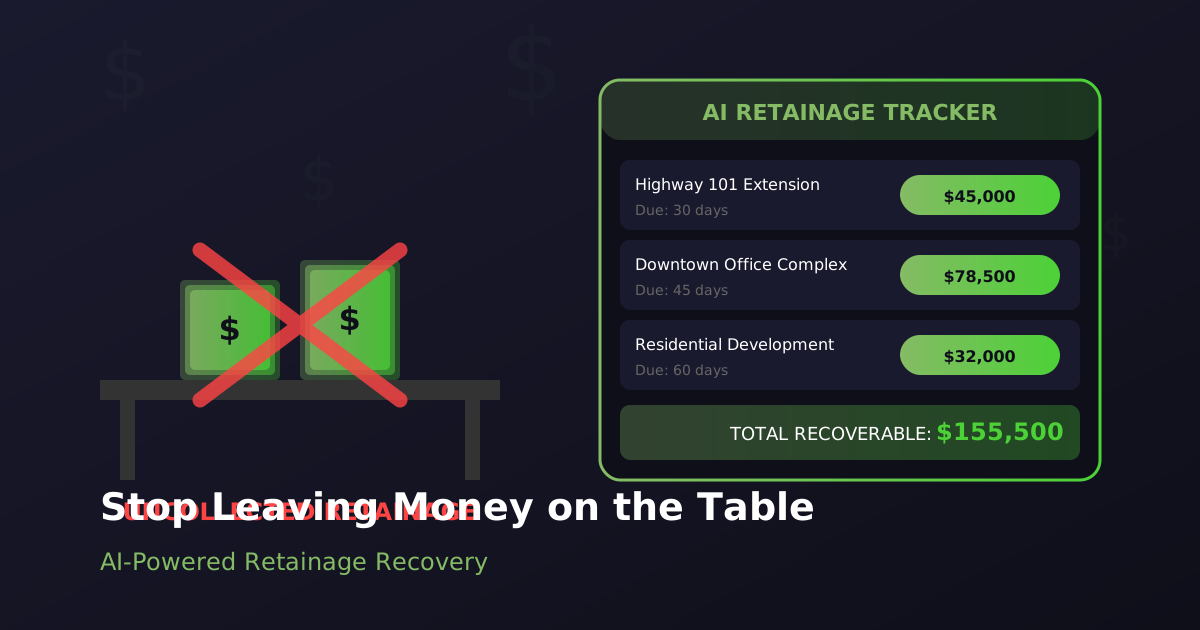
Here's a scenario that plays out thousands of times every year: A contractor finishes a $2 million project, collects their final payment, and moves on to the next job. Six months later, someone asks about the $100,000 in retainage from that project. The contractor vaguely remembers there was retainage... but the release conditions, the paperwork, the deadlines—all lost in the chaos of running a business.
That $100,000? It often represents the entire profit margin on the project. And it's sitting in someone else's bank account, forgotten.
Retainage management is one of the most overlooked aspects of construction accounting. It's also one of the most costly when handled poorly.
Understanding Retainage
For those who need a refresher, retainage (also called retention) is a portion of each progress payment that's withheld until project completion or other specified conditions are met. Typical retainage rates range from 5-10% of each payment.
The purpose is legitimate: protecting project owners from incomplete work, defects, or contractor default. But the practice creates real challenges for contractors:
Cash Flow Impact
On a $1 million project with 10% retainage, you've earned $100,000 that you can't touch until final completion. Scale that across multiple projects, and you might have $300,000, $500,000, or more tied up in retainage at any given time.
Administrative Burden
Tracking retainage requires monitoring: - How much is held on each project - What conditions trigger release - When those conditions are met - Aging of retainage balances - Proper invoicing for release
Legal Complexity
Retainage laws vary by state. Some cap the percentage that can be retained. Some require interest on held amounts. Some limit retainage on subcontractors even when the GC's retainage is higher. Compliance requires knowing the rules.
Where Retainage Goes Wrong
Tracking Failures
Many contractors track retainage in spreadsheets—or in their heads. Without systematic tracking, retainage balances become uncertain. "I think we have about $75,000 in retainage" isn't a financial plan.
Missing Release Deadlines
Retainage release often requires specific actions: submitting a release request, providing closeout documents, waiting a defined period after substantial completion. Miss a deadline or forget a requirement, and you wait even longer for your money.
Documentation Gaps
Releasing retainage typically requires proving you've met the conditions: punch list completion, final inspections, warranty documentation. If you can't provide the documentation, you can't get the release.
Accounting Mismatches
Retainage should be tracked separately from regular receivables. When it's mixed in, you might think you're owed more or less than you actually are. AR aging reports become unreliable.
Subcontractor Complications
If you're a GC holding subcontractor retainage, you have obligations on both sides: collecting retainage from the owner and paying it to subs when conditions are met. Timing mismatches create disputes and potential legal exposure.
The Cost of Poor Retainage Management
Direct Financial Impact
Uncollected retainage is the most obvious cost. A mid-sized contractor with $10 million in annual revenue might have $500,000-$1,000,000 in retainage at any time. If just 5% of that is never properly collected, that's $25,000-$50,000 in annual lost profit.
Interest and Opportunity Costs
Money sitting as retainage isn't in your bank account earning interest or being reinvested in your business. At current rates, the opportunity cost on $500,000 over a year is significant.
Administrative Costs
Hours spent tracking, researching, and chasing retainage release could be spent on revenue-generating activities. The cost of administrative inefficiency compounds over time.
Client Relationship Damage
Aggressive retainage collection can strain client relationships. But so can disorganized collection attempts. The contractor who submits complete, timely release requests gets their money faster and looks more professional.
Building a Retainage Management System
Foundation: Accurate Tracking
Every project should have: - Clear retainage percentage and terms from the contract - Running balance of retainage held - Conditions for release - Timeline for expected release - Documentation requirements
This information should be captured when the project starts, not scrambled for at completion.
Process: Regular Monitoring
Monthly retainage review should answer: - What is our total retainage balance? - Which projects are nearing release conditions? - What documentation do we need to prepare? - Are any balances at risk of non-collection?
Automation: AI-Powered Management
Modern accounting tools can automate most retainage management:
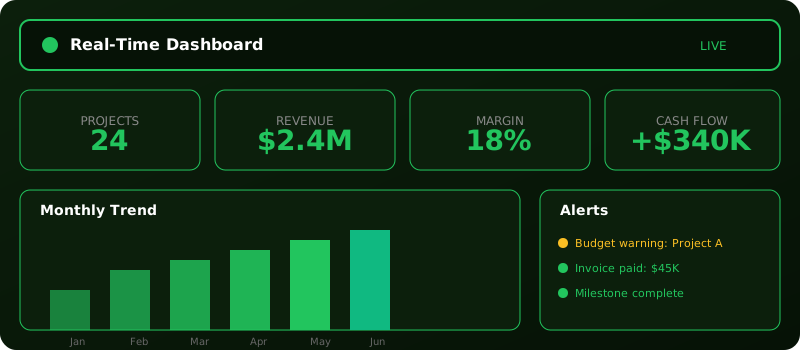
Automatic Tracking Every progress billing automatically calculates and tracks retainage. No manual entries or spreadsheet updates required.
Release Monitoring The system tracks release conditions and alerts you when projects approach eligibility. No more forgotten retainage.
Documentation Checklists Before release becomes eligible, you receive reminders about required documentation. Prepare in advance rather than scrambling at the deadline.
Aging Analysis Visual reports show retainage balances by age, helping you prioritize collection efforts on older balances.
Integration with AR Retainage flows correctly through your accounting system, providing accurate financial reporting and cash flow forecasting.
State-by-State Considerations
Retainage laws vary significantly. Key variations include:
### Percentage Limits Many states cap retainage at 5% after the project is 50% complete. Some prohibit retainage entirely on certain project types.
### Payment Timing Some states require retainage release within specific timeframes after substantial completion. Others allow "reasonable" periods that invite interpretation.
### Interest Requirements A few states require interest on held retainage. Know if yours does—and calculate accordingly.
### Subcontractor Protections Many states limit how much retainage GCs can hold from subs, even if the owner holds more from the GC. Mismatches require careful cash flow management.
### Public vs. Private Projects Different rules often apply to government projects versus private work.
The complexity argues for systematic tracking that accounts for these variations automatically.
Quick Wins for Better Retainage Management
If you're not ready for a full system overhaul, these steps will help immediately:
1. Audit Current Retainage
List every project with outstanding retainage. For each: - What amount is held? - What are the release conditions? - What documentation is needed? - When should release be requested?
This audit alone often uncovers forgotten money.
2. Create a Retainage Calendar
Based on your audit, create a calendar showing expected release dates. Review monthly and adjust as projects progress.
3. Standardize Documentation
Create a checklist of typical release requirements. Start gathering documents well before release is due.
4. Establish Review Routines
Monthly financial review should include retainage status. Quarterly review should include collection efforts on aging balances.
5. Train Your Team
Everyone involved in project completion should understand retainage requirements. PMs should know that final punch completion triggers documentation needs.
The Bottom Line
Retainage represents money you've already earned. Collecting it shouldn't require heroic effort—but without proper systems, it often does.
The contractors who manage retainage well get their money faster, with less effort, and with better client relationships. Those who don't leave profit on the table and create unnecessary cash flow stress.
Which would you rather be?
Ready to improve your retainage management? Explore our Accounting Agent for automated retainage tracking, or download our free Lien Waiver template to improve your closeout documentation.