The Rollercoaster Nobody Wants to Ride
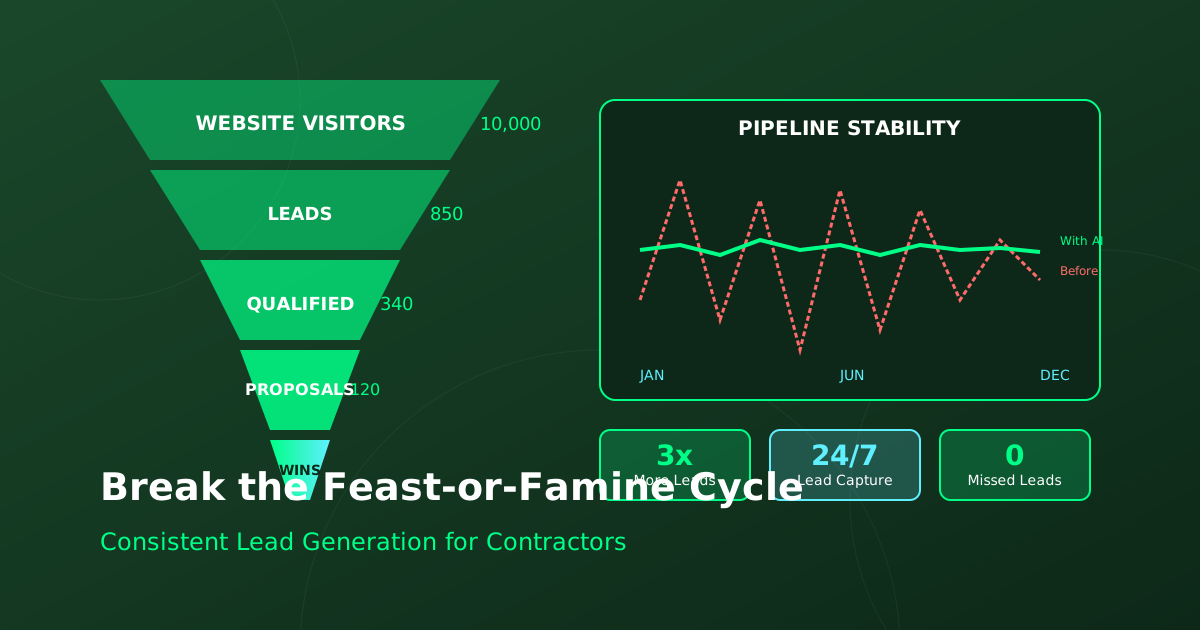
Every contractor knows the feeling. One month you're turning down work, the next you're wondering where your next project will come from. The feast-or-famine cycle isn't just stressful—it's expensive. When work is slow, you lose good employees. When it's busy, you're too overwhelmed to build the pipeline that would prevent the next drought.
Breaking this cycle requires a different approach to lead generation—one that produces consistent results regardless of how busy you are on current projects. Here's how to build that system.
Why Traditional Lead Generation Fails
The "When I Have Time" Problem
Most contractors market when they have time, which means they don't market when they're busy (when they should be building pipeline) and scramble when they're slow (when it's often too late). This reactive approach guarantees inconsistency.
Over-Reliance on Referrals
Referrals are wonderful—when they come. But relying solely on word-of-mouth means accepting whatever volume and type of work finds you. You can't grow strategically when you're just hoping the phone rings.
Expensive Third-Party Services
Home services lead providers charge $50-300 per lead, often selling the same lead to multiple contractors. You're competing against 3-4 others for every opportunity, and your cost per acquisition skyrockets.
Inconsistent Follow-Up
A lead comes in. You're on a job site. You call back the next day. They've already hired someone else. According to research, companies that respond within an hour are 7x more likely to qualify leads than those who wait longer.
Building a Sustainable Lead Pipeline
Foundation: Your Digital Presence
Before generating leads, you need somewhere to send them. Your digital foundation includes:
Website That Works - Loads fast (under 3 seconds) - Works on mobile devices - Clearly communicates what you do and where - Makes it easy to contact you - Shows your work with quality photos
Google Business Profile - Complete and accurate information - Regular posts and updates - Response to every review - Photos of completed projects
Social Media Presence - Consistent posting (even if just 2-3x weekly) - Project photos and progress updates - Behind-the-scenes content - Client testimonials and reviews
Layer 1: Inbound Lead Generation
Inbound marketing attracts people who are actively looking for your services.
Search Engine Optimization (SEO) - Optimize for local search terms ("commercial contractor in [city]") - Create content that answers common questions - Build local citations and directory listings - Encourage and respond to online reviews
Content Marketing - Blog posts addressing common client questions - Project case studies with before/after photos - Video walkthroughs of your process - Guides and resources for your target clients
Paid Search (When Appropriate) - Google Ads for high-intent search terms - Carefully tracked cost per lead - Landing pages optimized for conversion
Layer 2: Outbound Lead Generation
Outbound marketing proactively reaches potential clients.
Strategic Relationships - Architects who specify your type of work - Real estate developers in your area - Property managers with ongoing needs - Other trades who can refer you
Direct Outreach - Identifying target clients and projects - Personalized outreach (not mass emails) - Consistent follow-up sequences - Value-first approach (helpful, not pushy)
Bid Board Monitoring - Public and private bid opportunities - Matching opportunities to your capabilities - Quick response to relevant RFPs

Layer 3: Speed-to-Lead
Getting leads is only half the battle. Converting them requires speed.
Instant Response - Automated acknowledgment within minutes - Commitment to live follow-up within an hour - Systems that work even when you're on a job site
Qualification Questions - Budget range - Timeline requirements - Project scope basics - Decision-making process
Nurture Sequences - Automated follow-up for leads not ready to buy - Educational content that builds trust - Periodic check-ins that keep you top of mind
The AI Advantage in Lead Generation
AI transforms lead generation from a manual, inconsistent process to an automated, reliable system.
Automated Lead Response
When a lead comes in—from your website, email, or phone—AI can: - Send immediate acknowledgment - Gather basic qualification information - Schedule follow-up calls - Alert you to hot leads that need immediate attention
Intelligent Follow-Up
AI handles the nurture sequences that humans forget: - Timed follow-up emails - Personalized content based on lead interests - Reminders when leads re-engage - Notifications when leads are sales-ready
Opportunity Monitoring
AI can monitor bid boards, news sources, and industry databases for opportunities that match your capabilities, alerting you before competitors even know about them.
Reputation Management
AI monitors review sites and social mentions, alerting you to new reviews and helping you respond appropriately. Reputation directly impacts lead generation—4.0 stars versus 4.5 stars can mean 25% more inquiries.
Measuring What Matters
You can't improve what you don't measure. Track these metrics monthly:
Volume Metrics - Total leads generated - Leads by source - Website traffic - Social engagement
Quality Metrics - Lead-to-opportunity conversion rate - Average project value of leads - Time from lead to first contact - Lead qualification rate
Efficiency Metrics - Cost per lead by source - Time spent on marketing activities - Response time to inquiries - Close rate on qualified opportunities
Building Your System: A 90-Day Plan
Days 1-30: Foundation
- Audit your current digital presence
- Fix critical website issues
- Claim and optimize Google Business Profile
- Set up basic tracking (Google Analytics, call tracking)
Days 31-60: Inbound Engine
- Identify target keywords
- Create initial content (3-5 pieces)
- Set up automated lead response
- Implement CRM or lead tracking system
Days 61-90: Outbound Layer
- Identify 50 target relationships to develop
- Create outreach sequences
- Set up bid board monitoring
- Launch nurture sequences for existing database
The Investment Question
Lead generation costs money—either in time or dollars. The question isn't whether to invest, but how.
DIY marketing requires 10-15 hours per week minimum to be effective. At $150/hour owner time, that's $78,000 per year in opportunity cost.
Marketing agencies cost $3,000-$10,000 per month but require management and often don't understand construction.
AI-powered tools cost $300-$1,000 per month and automate the consistent execution that makes marketing work.
The right combination depends on your situation, but doing nothing isn't actually free—it's the most expensive option of all.
Breaking the Cycle
The feast-or-famine cycle isn't inevitable. It's a symptom of reactive marketing. When you build systems that generate leads consistently—regardless of how busy you are—the cycle breaks.
It won't happen overnight. Building a sustainable lead pipeline takes 6-12 months of consistent effort. But once it's running, you'll wonder how you ever operated without it.
Ready to build your lead generation system? Explore our Marketing Agent for AI-powered lead generation and nurturing, or contact us to discuss your specific situation.