The Bidding Battleground
Every construction company lives or dies by its bid win rate. Win enough bids at the right margin, and you thrive. Miss too many, or win at the wrong price, and you struggle. It's that simple—and that difficult.
Here's what makes bidding so challenging: it's a numbers game that doesn't feel like one. You might need to bid on 20 projects to win 3. Each bid takes 4-8 hours to prepare. That's potentially 160 hours of work to win three projects. And if your proposals aren't competitive, you're burning time with nothing to show for it.
The contractors who are winning today have figured out a different approach. They're using AI to create better proposals faster—and the results are impressive.
The Traditional Bidding Problem
Time vs. Quality Tradeoff
You know you should customize every proposal. Include detailed scope descriptions, relevant project experience, and thoughtful scheduling. But with limited time, something has to give. So you copy-paste from previous proposals, hoping the client won't notice the outdated references.
Speed to Market
In construction bidding, being first often matters as much as being best. The contractor who submits a professional proposal within 24 hours makes a different impression than one who takes a week. But quality proposals take time—time you often don't have.
Consistency Challenges
Your proposals probably vary wildly depending on who prepares them, what template they start from, and how much time they have. This inconsistency hurts your brand and makes it harder to identify what's working and what isn't.
Lost Institutional Knowledge
Your best estimator knows exactly what to include in a hospital renovation bid versus a retail buildout. But that knowledge lives in their head. When they're busy, sick, or eventually leave, that expertise is gone.
How AI Changes the Game
AI-powered bid management doesn't just make the same process faster—it fundamentally changes what's possible.
Intelligent Proposal Generation
Modern AI can analyze a bid opportunity and generate a customized proposal in minutes. Not a generic template, but a document that:
- Reflects the specific project requirements
- Highlights relevant experience from your project history
- Uses appropriate technical language for the client and project type
- Includes realistic scheduling based on similar projects
- Prices competitive with market conditions
You still review and refine, but you're editing a solid draft instead of starting from scratch.
Consistent Quality at Scale
AI doesn't have bad days. It doesn't rush because it's Friday afternoon. Every proposal meets the same quality standards, includes the same essential elements, and reflects your company's best practices. Consistency builds trust with clients and helps you track what's working.
Faster Response Times
When you can generate a quality proposal in 15-20 minutes instead of 4-6 hours, everything changes:
- You can bid on more opportunities
- You can respond to RFPs faster
- You have time to strategically customize for high-priority bids
- You're never rushing at deadline, making mistakes
Learning and Improvement
AI systems learn from your bid history. They identify patterns in winning proposals:
- What pricing strategies work for different project types?
- Which experience highlights resonate with which clients?
- What scheduling approaches win more often?
This feedback loop continuously improves your hit rate.
Real Numbers from Real Contractors
The statistics are compelling:
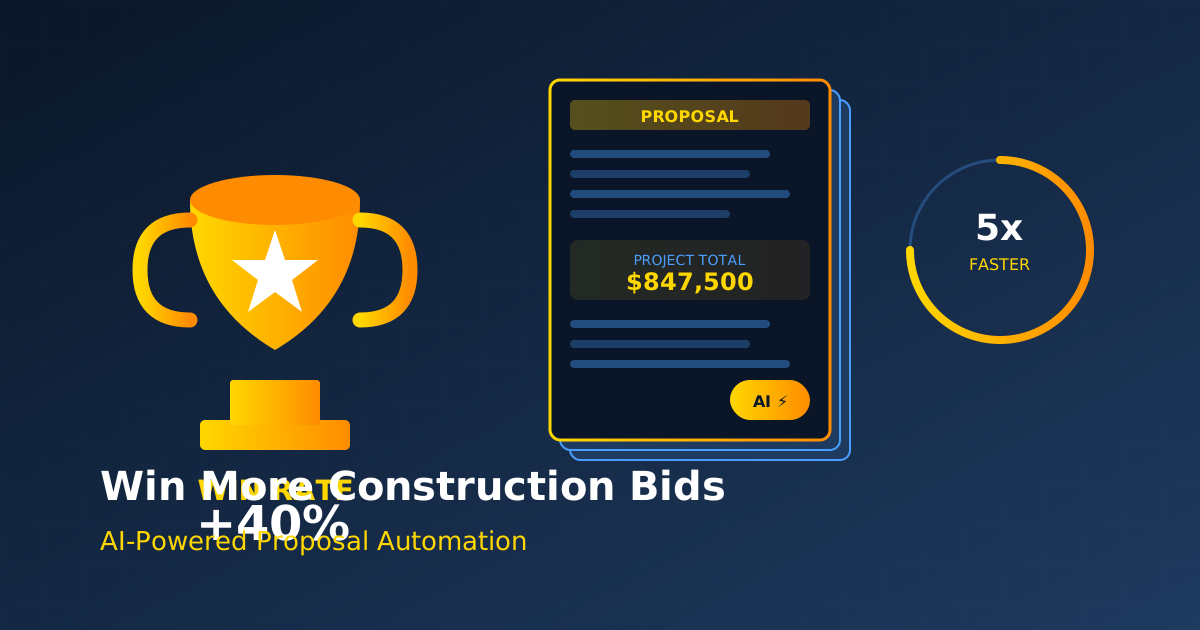
- 31% higher win rate for contractors using dedicated bid management platforms
- 22% lower estimating costs through reduced labor hours
- 75% reduction in proposal preparation time with AI assistance
- 40% improvement in bid-to-win ratio when combining AI proposal generation with historical analysis
These aren't marginal improvements. They're business-transforming numbers.
What AI-Assisted Bidding Looks Like
Step 1: Opportunity Analysis
When a new bid opportunity arrives, AI analyzes it against your capabilities: - Does this match your service offerings? - Do you have relevant experience? - Is the location within your target area? - Does the timeline work with your current commitments?
This pre-screening prevents wasted effort on unsuitable bids.
Step 2: Competitive Intelligence
AI can research the project and client: - What similar projects has this client awarded? - What were the winning bids? - Who are likely competitors? - What factors seem to matter most to this client?
This intelligence shapes your bidding strategy.
Step 3: Proposal Generation
Based on the opportunity analysis and your historical data, AI generates a complete proposal including: - Executive summary tailored to the client - Detailed scope of work - Relevant project experience and references - Proposed schedule with realistic milestones - Pricing that balances competitiveness with profitability
Step 4: Human Review and Refinement
You review the generated proposal, making strategic adjustments: - Emphasize certain capabilities for this specific client - Adjust pricing based on how badly you want the work - Add personal touches that AI can't provide
Step 5: Submission and Tracking
The system tracks your submitted bid and logs the outcome, feeding data back into the system to improve future proposals.
Implementation Roadmap
Week 1: Gather Your Data
AI proposal generation works best with your historical information: - Past proposals (winning and losing) - Project portfolio with photos and details - Standard scope descriptions and specifications - Pricing history by project type
Week 2: Template Development
Work with your AI system to create base templates for your common project types. These aren't generic documents—they're structured frameworks that AI will customize for each opportunity.
Week 3: Pilot Program
Start using AI assistance on a subset of bids. Compare: - Time to complete proposals - Quality of generated content - Client feedback (if available) - Win rates
Week 4 and Beyond: Refinement and Expansion
Based on pilot results, refine your approach and expand usage. Track metrics religiously so you can quantify improvement.
Common Objections Addressed
"Every project is unique—AI can't understand the nuances"
True, AI doesn't understand nuances the way experienced estimators do. That's why AI assists rather than replaces human judgment. You bring the nuance; AI handles the heavy lifting of document generation.
"Our clients want personal relationships, not automated proposals"
AI proposals aren't impersonal—they're efficient. The time you save on document generation is time you can spend on actual relationship building. Clients want fast, professional responses; they don't care whether a human typed every word.
"We've been doing it this way for 30 years"
And how are your win rates? The construction industry is getting more competitive. Contractors who don't adapt find themselves losing to those who do. Thirty years of experience is valuable; combining it with modern tools makes it more valuable.
"AI-generated proposals will all look the same"
Only if you let them. AI generates drafts based on your input and guidance. The more customization you provide, the more unique the output. Think of AI as a capable assistant, not a replacement for your expertise.
The Bottom Line
Every hour spent on proposal preparation is an hour not spent on client development, project oversight, or strategic planning. AI doesn't just save time on bids—it frees time for higher-value activities.
In a market where win rates often determine survival, tools that improve your odds aren't luxuries. They're necessities.
Ready to win more bids? Explore our Marketing Agent for AI-powered proposal assistance, or start with our free Bid Proposal Template to improve your process today.