The Paperwork Paradox
Your superintendent is one of the most valuable people on your team. They have decades of experience, deep technical knowledge, and hard-earned judgment about how to keep projects on track. So why are they spending three hours every evening typing reports?
The answer is obvious when you think about it: documentation is essential. Daily reports, safety records, progress photos, delivery logs—without this information, projects fall apart. But the traditional approach to gathering it is fundamentally broken.
Here's the paradox: the people best qualified to document what happens on job sites are too valuable to spend their time documenting what happens on job sites. Something has to change.
The True Cost of Manual Documentation
Time Drain
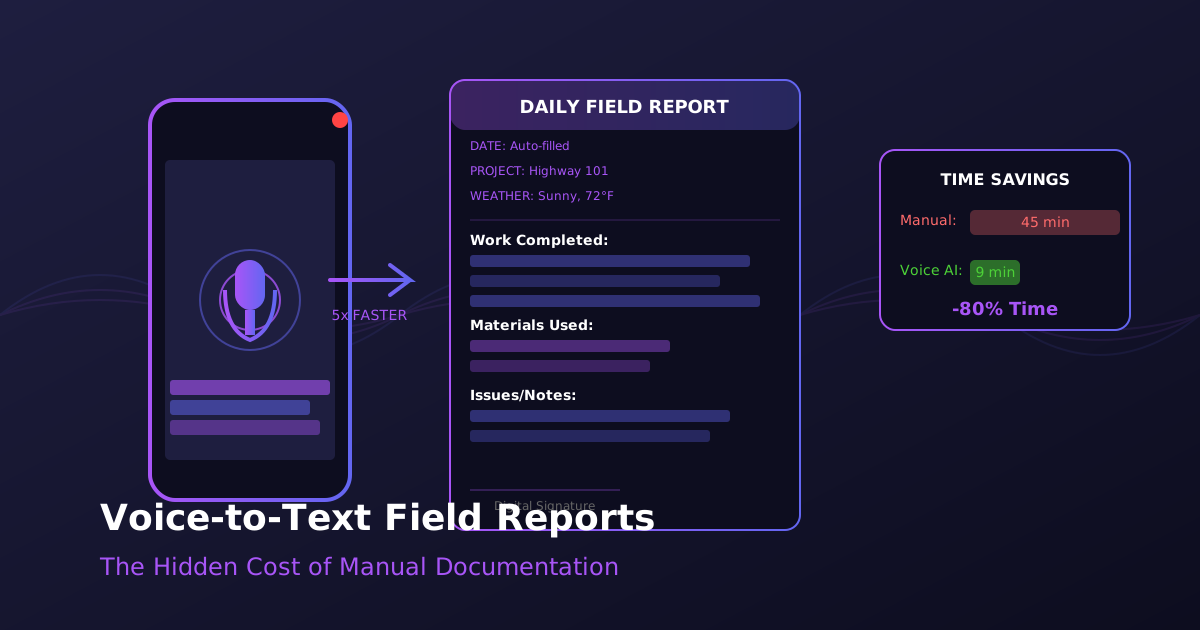
According to industry surveys, superintendents spend 2-3 hours daily on administrative tasks, with field reports being the primary culprit. On a five-day work week, that's 10-15 hours—essentially an extra workday—spent on paperwork instead of supervision.
Quality Degradation
Reports written at 7 PM after a long day on site are rarely comprehensive. Important details get forgotten. Observations that seemed obvious in the moment become fuzzy. The documentation that should protect you in disputes becomes unreliable.
Talent Misallocation
Every hour your superintendent spends typing is an hour they're not: - Preventing problems before they start - Mentoring junior team members - Coordinating with subcontractors - Thinking ahead to next week's challenges
You're paying senior rates for data entry work.
Data That Never Gets Used
McKinsey reports that 95% of construction data goes unused. Field reports full of valuable information sit in folders, never analyzed. Patterns that could prevent future problems—repeated safety issues, recurring subcontractor delays, weather impacts—remain invisible.
The Voice-to-Text Revolution
What if your superintendent could create comprehensive field reports by simply talking, while walking the job site? That's not a future concept—it's available technology that's transforming how leading contractors document their work.
How It Works
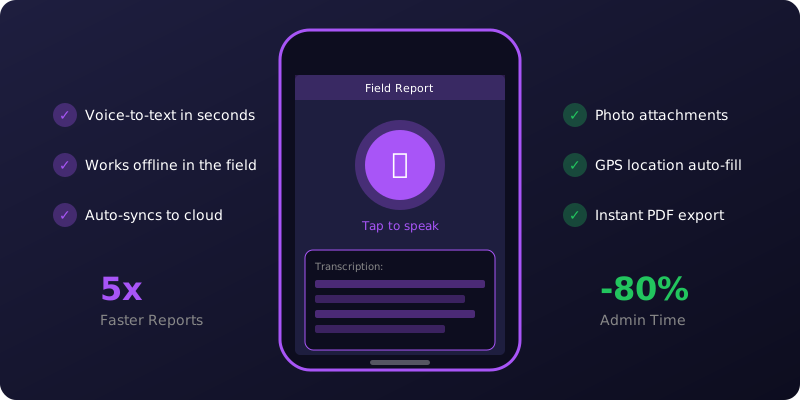
Modern voice-to-text tools for construction:
Capture While Working The superintendent walks the site with their phone, narrating observations. "Plumbing rough-in complete in units 101 through 108. HVAC team started ductwork on the second floor. Noticed some pooling water near the east foundation—need to investigate drainage."
Smart Transcription AI doesn't just transcribe words—it understands construction context. It knows "HVAC" and "ductwork," recognizes location references, and formats information appropriately.
Structured Output Raw narration becomes organized reports: work completed, safety observations, weather conditions, deliveries received, issues identified, labor counts. All in the right format without manual reorganization.
Photo Integration Voice annotations can tag photos automatically. "Photo of pooling water near east foundation—Issue #47" links the image to the corresponding report entry.
The Experience Difference
Traditional process: 1. Walk site (1 hour) 2. Remember what you saw 3. Sit at computer (7 PM) 4. Type report from memory (2 hours) 5. Maybe remember to attach photos 6. File report where nobody will look at it
Voice-to-text process: 1. Walk site while narrating (1 hour) 2. Review and approve generated report (15 minutes) 3. Done, while information is fresh and complete
Beyond Time Savings: Data That Works
The real opportunity isn't just faster report creation—it's making field data useful.
Pattern Recognition
When field reports are digital and searchable, AI can identify patterns: - Which subcontractors consistently complete work without issues? - What weather conditions cause the most delays? - Where do safety observations cluster? - Which project phases generate the most RFIs?
This analysis is impossible with paper reports or scattered PDFs.
Real-Time Visibility
Leadership can see what's happening across projects without waiting for weekly meetings. Morning narration becomes afternoon dashboard updates. Problems surface faster.
Institutional Knowledge
When veteran superintendents narrate their observations, they capture expertise that would otherwise exist only in their heads. "I always check the north-facing windows for condensation issues this time of year" becomes documented best practice.
Dispute Protection
Clear, contemporaneous documentation—created in real-time with date and location stamps—provides much stronger legal protection than reconstructed reports written days later.
Implementation: Making the Switch
Start with Champions
Identify superintendents who are frustrated with paperwork and open to new approaches. Their success stories will convince skeptics.
Define Minimum Requirements
What must every daily report include? Create a simple template: - Weather conditions - Labor on site - Work completed - Deliveries received - Safety observations - Issues or concerns - Photos
Train the Narration Habit
Speaking reports requires a different mindset than writing them. Coach your team to: - Narrate as they observe, not from memory - Describe location specifically - Include context, not just facts - Take photos as they go
Review and Refine
Early reports will need more editing. As superintendents refine their narration style and AI learns your terminology, quality improves rapidly.
Build the Analysis Habit
With digital reports flowing in, establish routines for analysis: - Weekly safety observation reviews - Monthly productivity pattern analysis - Quarterly subcontractor performance evaluation - Project close-out lessons learned
Common Concerns Addressed
"My guys won't talk to their phones"
Surprisingly, most superintendents adapt quickly. Talking is faster and more natural than typing. Frame it as getting their evenings back, not as new technology to learn.
"Voice-to-text won't understand construction terms"
Construction-specific AI tools are trained on industry vocabulary. They know rough-in, RFI, HVAC, and hundreds of other terms. General consumer tools struggle; specialized tools excel.
"What about job site noise?"
Modern noise cancellation handles typical site conditions well. For extremely noisy situations, stepping aside briefly or using a directional microphone helps. It's still faster than typing later.
"Will the reports be as good?"
They'll likely be better. Real-time narration captures details that get forgotten. The format might be different—less polished prose, more bullet points—but the information is more complete and accurate.
"What about older team members who aren't tech-savvy?"
Voice input is often more intuitive for non-tech users than keyboard and mouse. Talking is natural; typing is learned. Many contractors find their most experienced (and oldest) superintendents adapt fastest.
The Bigger Picture
Field documentation is just one piece of construction data management, but it's a critical one. The information generated on job sites every day—what happened, what worked, what didn't—is the raw material for better decisions.
Right now, most of that information is lost: trapped in handwritten notes, forgotten before reports are written, or filed where no one will find it. Voice-to-text documentation doesn't just save time—it captures knowledge.
In a competitive industry facing labor shortages and margin pressure, the contractors who use their data well have a significant advantage. And it all starts with capturing that data efficiently.
Ready to transform your field documentation? Explore our Operations Agent for AI-powered field reporting, or start with our free Daily Construction Log template to establish better documentation practices.