You Didn't Start a Construction Company to Answer Emails
Let's be honest. When you started your construction business, you had a vision: building projects, growing a team, creating something lasting. What you probably didn't envision was spending three hours every morning sorting through emails, scheduling meetings, and researching vendors.
Yet here you are. A recent survey found that construction business owners spend an average of 15-20 hours per week on administrative tasks that don't directly contribute to revenue. That's nearly half a typical work week—time that could be spent winning new business, strengthening client relationships, or simply being present on job sites.
The good news? There's a solution that doesn't require hiring another full-time employee. AI executive assistants are changing how construction CEOs work—and the results are remarkable.
What an AI Executive Assistant Actually Does
When most people hear "AI assistant," they think of Siri or Alexa—helpful for setting timers and playing music, but not much else. AI executive assistants are fundamentally different. They're specialized tools designed to handle complex business tasks that traditionally required human judgment.
Email Triage and Response
Your inbox is probably a disaster. Bid requests mixed with spam, urgent messages buried under newsletters, and important emails sitting unread for days. An AI executive assistant can:
- Sort incoming emails by priority, sender, and subject matter
- Draft responses to routine inquiries (RFIs, scheduling questions, vendor requests)
- Flag urgent items that need your personal attention
- Follow up automatically on unanswered messages
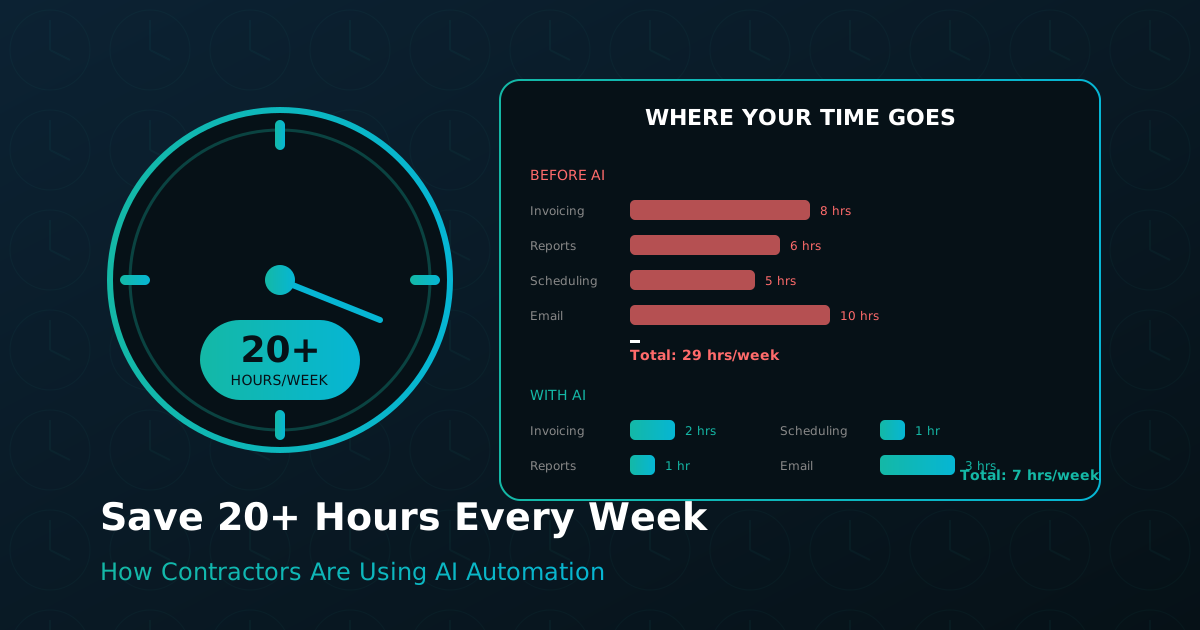
The result? Instead of 90 minutes scanning emails each morning, you spend 15 minutes reviewing pre-sorted priorities and approving drafted responses.
Calendar Management
Scheduling is a constant battle. Coordinating client meetings, site visits, subcontractor walkthroughs, and internal reviews requires juggling multiple calendars and preferences. AI handles this by:
- Scheduling meetings based on your preferences and availability
- Sending reminders to all parties before appointments
- Rescheduling automatically when conflicts arise
- Blocking focus time so you're not booked wall-to-wall
Research and Information Gathering
How much time do you spend researching vendors, checking permit requirements, or pulling together information for decisions? AI assistants can:
- Research vendors and compile comparison reports
- Monitor industry news and regulatory changes
- Prepare briefings before client meetings
- Gather competitive intelligence on upcoming bids
Real Results: What 10 Hours Back Per Week Looks Like
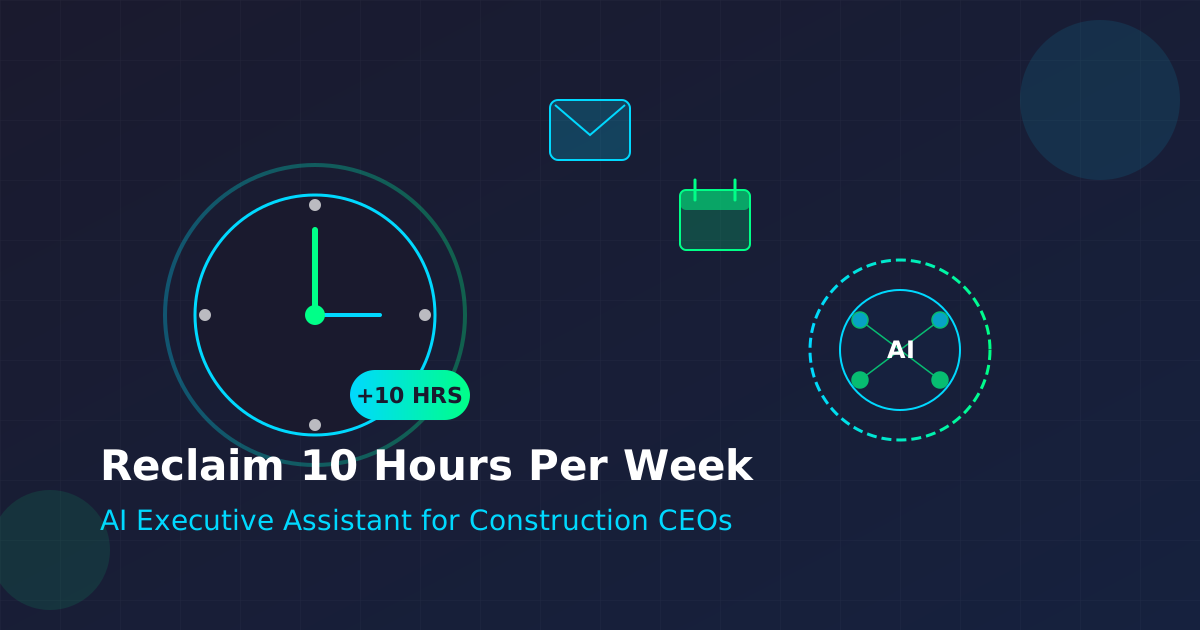
Ten hours might not sound revolutionary until you think about what you could accomplish:
One day per week for business development—building relationships with architects, developers, and potential clients. Over a year, that's 52 additional days focused on growth.
Time for strategy—stepping back from daily operations to think about where your business is heading. Most construction CEOs never get this time.
Better work-life balance—leaving the office at 5 PM occasionally, or taking a real weekend. Burnout is rampant in construction leadership; this doesn't have to be your story.
Higher-value tasks—negotiating better deals with suppliers, mentoring your project managers, or personally handling your most important client relationships.
Why Traditional Solutions Fall Short
You've probably tried other approaches to manage the administrative burden:
Hiring an Assistant
A good executive assistant costs $50,000-$80,000 per year (or much more in high-cost areas), plus benefits, training, and management overhead. They work 40 hours per week, take vacations, and eventually leave. And finding a truly capable one is incredibly difficult.
Delegation to Existing Staff
Your project managers and estimators have their own jobs. Piling administrative work on them leads to burnout, mistakes, and resentment. It's a false economy.
"I'll Just Work Harder"
This is the trap most construction CEOs fall into. Working 70-hour weeks isn't sustainable, and it's not even effective. Exhausted leaders make poor decisions and miss opportunities.
Outsourcing Services
Virtual assistant services can help, but they're expensive ($25-50/hour), require constant supervision, and often lack construction industry knowledge. They're better than nothing, but far from optimal.
How to Get Started

Implementing an AI executive assistant doesn't require a complete overhaul of how you work. Here's a practical approach:
Week 1: Audit Your Time
Track every task you complete for a full week. Be specific: "answered emails about Project X" not just "emails." Identify patterns in what consumes your time.
Week 2: Identify Delegation Candidates
Review your time audit and flag tasks that: - Are repetitive or routine - Don't require your unique expertise - Could be handled by clear rules or templates - Take disproportionate time relative to their value
Week 3: Start with Email
Email is typically the biggest time sink and the easiest win. Set up your AI assistant to triage incoming messages and draft responses to common inquiries. Review everything it produces for the first few weeks, then gradually increase autonomy as you build confidence.
Week 4 and Beyond: Expand Gradually
Once email is running smoothly, add calendar management. Then research tasks. Don't try to automate everything at once—that's a recipe for frustration.

The Competitive Advantage Nobody Talks About
Here's something most articles won't tell you: the contractors who are winning right now aren't just working harder. They're working differently. While competitors spend their days drowning in administrative work, AI-enabled CEOs are:
- Responding to bids faster
- Building deeper client relationships
- Spotting problems before they become crises
- Actually thinking about their business instead of just running it
In an industry where relationships matter and reputation is everything, having time to invest in both is a significant advantage.
Making the Decision
If you're spending 15+ hours per week on tasks that don't require your unique skills and judgment, you're not leading your company—you're just keeping it running. That might have been acceptable when you started out, but it's not a sustainable path to growth.
The question isn't whether you can afford an AI executive assistant. It's whether you can afford not to have one.
Ready to reclaim your time? See how Lava Focus AI's Executive Assistant can transform how you work, or book a demo to see it in action with your actual workflows.